
Body Shape Calculator
Enter your bust, waist and hip measurements to estimate your body shape.
Measure around the fullest part of your bust.
Measure around the narrowest part of your natural waist.
Measure around the fullest part of your hips and seat.
Style Direction
Body-shape categories are general styling guides, not strict rules. Your proportions may fall between more than one shape.
Body Shape Calculator for Women
Your body shape comes from the relationship between your bust, waist, and hip measurements.
Our Body Shape Calculator compares those measurements and shows which common body-shape category your proportions most closely match.
Enter your measurements above to estimate whether your shape is closest to:
- Hourglass
- Pear / Triangle
- Inverted Triangle
- Apple / Round
- Rectangle
Your result gives you a useful starting point for understanding clothing fit and outfit proportions. It does not tell you what you should or should not wear.
How to Measure for the Body Shape Calculator
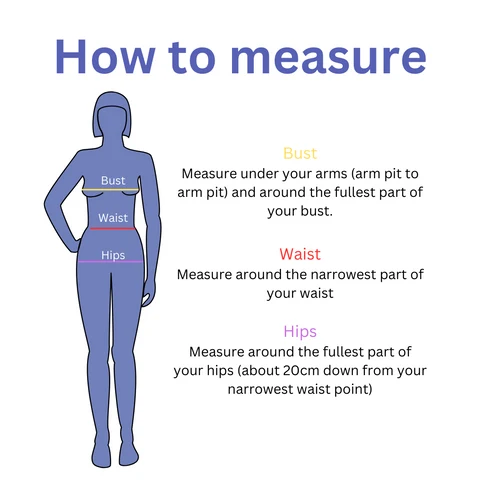

Accurate measurements give you a more useful result.
Use a soft measuring tape and stand naturally while you measure. Keep the tape level around your body and comfortably snug rather than tight. Measurement guides consistently recommend measuring over light clothing or close-fitting garments rather than bulky clothes.
Measure Your Bust
Wrap the measuring tape around the fullest part of your bust.
Keep your arms relaxed and make sure the tape stays level across your back.
A well-fitting, non-padded bra usually gives you a more natural measurement than a heavily padded bra.
Measure Your Waist
Measure around your natural waist.
This usually sits around the narrowest part of your torso.
If you have trouble finding it, gently bend to one side. The crease that forms usually shows your natural waistline.
Stand normally and breathe naturally. Do not pull your stomach in while measuring.
Measure Your Hips
Stand with your feet together and wrap the tape around the fullest part of your hips and seat.
Make sure the tape stays parallel to the floor.
Once you have all three measurements, enter them into the calculator in either inches or centimeters.
What Does Your Body Shape Result Mean?
Body shape describes proportion, not overall body size.
For example, two women can wear completely different clothing sizes and still have similar body proportions.
Likewise, two women who wear the same dress size can have very different relationships between their bust, waist, and hips.
That is why your body shape and your dress size are not the same thing.
Hourglass Body Shape
An hourglass shape usually has:
- a bust and hips that are relatively balanced
- a noticeably defined waist
- similar visual proportion through the upper and lower body
If your measurements most closely match an hourglass shape, clothes that follow your natural waist often work particularly well.
You may like:
- wrap dresses
- belted dresses
- high-waisted trousers
- fitted jackets
- waist-defined jumpsuits
- pencil skirts
- softly tailored tops
You do not have to emphasize your waist every time you dress.
If you prefer a straighter or more relaxed look, you can still wear looser silhouettes. The calculator simply helps you understand why garments with waist shaping often follow your natural proportions comfortably.
Pear or Triangle Body Shape
A pear or triangle shape usually means your hips are proportionally wider than your bust or upper body.
You may notice that:
- trousers fit your hips but leave space at the waist
- your lower half needs a different size from your upper half
- straight-cut garments fit differently through your hips
If you want to create more visual balance between your upper and lower body, try:
- structured shoulders
- boat necks
- statement collars
- patterned tops
- lighter-colored tops
- fitted jackets
- A-line dresses
- straight or bootcut trousers
One particularly practical option is curvy-fit jeans or trousers.
If regular trousers fit your hips but consistently gap at the waist, the issue may be the garment’s proportions rather than the size itself.
Inverted Triangle Body Shape
An inverted triangle shape usually means your upper body is proportionally broader than your hips.
This may come from:
- broader shoulders
- a fuller bust
- narrower hips
- or a combination of these
If you want to add more visual weight below the waist, you can experiment with:
- A-line skirts
- wide-leg trousers
- bootcut jeans
- fuller skirts
- softly flared dresses
- simple necklines
- longer jackets
You do not need to hide your shoulders or bust.
Think instead about how you want the overall silhouette to feel.
Adding shape or movement through the lower half often creates a more balanced visual line.
Apple or Round Body Shape
An apple or round shape usually has less difference between the waist and the bust or hips.
Your middle may carry more visual proportion than your waist does in other body-shape categories.
If you prefer a longer, smoother line through your torso, try:
- V-neck tops
- open necklines
- straight-cut jackets
- softly structured layers
- longer cardigans
- straight-leg trousers
- dresses that skim the body
- gentle A-line silhouettes
Very oversized clothing does not always create the most comfortable or flattering effect.
A garment that lightly follows the body without clinging often gives you more shape and movement than one with large amounts of extra fabric.
Rectangle Body Shape
A rectangle shape usually has:
- relatively similar bust and hip measurements
- less difference between the waist and the bust or hips
- a naturally straighter silhouette
If you want to create more visible waist definition, try:
- wrap tops
- belted dresses
- cropped jackets
- high-waisted trousers
- peplum details
- layered outfits
- textured fabrics
- dresses with waist seams
You can also work with your naturally straight proportions rather than trying to change them.
Longline blazers, column dresses, tailored trousers, and clean monochrome outfits can work particularly well with a straighter silhouette.
What If You Fall Between Two Body Shapes?
You do not always fit neatly into one category.
That is normal.
Body-shape calculators take a huge variety of real bodies and group them into a small number of useful styling categories.
If your measurements sit close to two classifications, you may relate to both.
For example, you may sit between:
- Hourglass and Rectangle
- Pear and Hourglass
- Rectangle and Apple
- Rectangle and Inverted Triangle
In that situation, use styling ideas from both categories.
Instead of asking:
“Which exact body shape am I?”
a more useful question is:
“Which cuts and proportions work best with my measurements?”
Your experience with actual clothing matters more than the label.
How Outfit Proportions Change the Silhouette
Different clothing shapes create different visual effects. You can use waist definition, upper-body emphasis, lower-body volume, long vertical lines, or soft layering depending on the look you want to create.
Body-shape advice works best when you treat these ideas as styling options rather than strict rules.

Your Body Shape and Clothing Size Are Different
A dress size estimates which standardized garment size may accommodate your measurements.
A body shape describes how those measurements compare with one another.
For example:
Woman A
Bust: 38″
Waist: 30″
Hips: 40″
and
Woman B
Bust: 44″
Waist: 35″
Hips: 46″
may wear different clothing sizes but still have similar proportions.
This is why body shape remains useful even when your dress size changes.
Use our Dress Size Calculator when you want an estimated clothing size rather than a proportion-based body-shape result.
Why the Right Size Can Still Fit Poorly
A size label does not tell you everything about garment fit.
Suppose a dress fits a 38-inch bust, 30-inch waist, and 40-inch hips.
Someone with the same bust but a larger waist may feel pulling through the middle.
Someone with wider hips may find that the top fits perfectly while the skirt feels tight.
This explains common fitting problems such as:
- jeans fitting the hips but gaping at the waist
- shirts pulling across the bust
- dresses fitting the upper body but not the hips
- jackets looking boxy at the waist
- trousers fitting the waist but feeling tight through the seat
Your body is not necessarily the problem.
The garment may simply use proportions that differ from yours.
Does Your Body Shape Change After 40?
Your body proportions can change over time.
Your waist, bust, hips, muscle distribution, and overall silhouette do not necessarily remain identical throughout adulthood.
That means clothes you love in one stage of life may sit differently later, even when your personal style stays the same.
Instead of relying on an old body-shape label, remeasure yourself when you notice that your usual cuts no longer fit as expected.
For women over 40, the goal is not to follow stricter clothing rules.
It is to understand your current proportions so you can choose garments that work with the body you have now.
How to Use Body Shape Advice Without Following Fashion “Rules”
Your result gives you options, not restrictions.
Instead of:
“I am pear-shaped, so I cannot wear this.”
think:
“If I want to create more upper-body emphasis, this neckline or jacket shape helps me do that.”
You can choose whether you want to:
- emphasize your waist
- create a straighter silhouette
- highlight your shoulders
- emphasize your legs
- balance your upper and lower body
- ignore conventional body-shape advice entirely
Personal style still comes first.
Your body-shape result simply gives you a better understanding of proportion.
How Accurate Is a Body Shape Calculator?
A calculator gives you an estimate based on the measurements you enter.
Your result may vary because bodies are more complex than three numbers.
Factors such as these can affect how your proportions look:
- shoulder width
- high-hip shape
- bust projection
- posture
- natural asymmetry
- where you take each measurement
- how closely you sit between two categories
Some more detailed body-shape systems also use shoulder or high-hip measurements.
Our calculator uses bust, waist, and hips because these measurements are easy to take at home and give a useful general estimate.
Common Measuring Mistakes
Avoid these common errors:
- measuring over bulky clothes
- pulling the tape too tightly
- letting the tape slope up or down
- measuring your trouser waistband instead of your natural waist
- sucking in your stomach
- measuring your hips with your feet far apart
- using inches for one measurement and centimeters for another
- guessing instead of measuring
For additional accuracy, measure each area twice.
If the two numbers differ, measure once more and use the measurement you reproduce most consistently.
Frequently Asked Questions
What measurements do I need?
You need your bust, waist, and hip circumference.
Can I use centimeters?
Yes.
Select centimeters in the calculator and enter all three measurements in centimeters.
What are the main female body shapes?
This calculator uses five common categories:
- Hourglass
- Pear / Triangle
- Inverted Triangle
- Apple / Round
- Rectangle
Other classification systems use additional categories such as spoon, top hourglass, and bottom hourglass.
Is body shape the same as body type?
People often use the terms interchangeably.
For fashion, body shape is usually the clearer term because it describes the proportions between areas such as your bust, waist, and hips.
What happens if my result does not look like me?
Measure yourself again first.
If the measurements remain the same, you may sit near the boundary between two body shapes.
The calculator provides a closest match rather than an absolute classification.
Can I have the same body shape at different weights?
Yes.
If the relationship between your bust, waist, and hips stays similar, your overall clothing size can change while your general body shape remains similar.
What is the best body shape?
There is no best body shape.
These categories describe proportions. They do not measure attractiveness, health, femininity, or style.
Does age determine what I should wear?
No.
Age does not create a fixed list of clothing you can or cannot wear.
Fit, proportion, comfort, lifestyle, and personal taste matter much more.
Your Body Shape Is a Starting Point
Your calculator result helps you understand why certain clothes fit naturally while others need more adjustment.
It does not put your body into a dress code.
Use the result to understand your proportions, experiment with different silhouettes, and keep the outfits that make you feel comfortable and confident.